
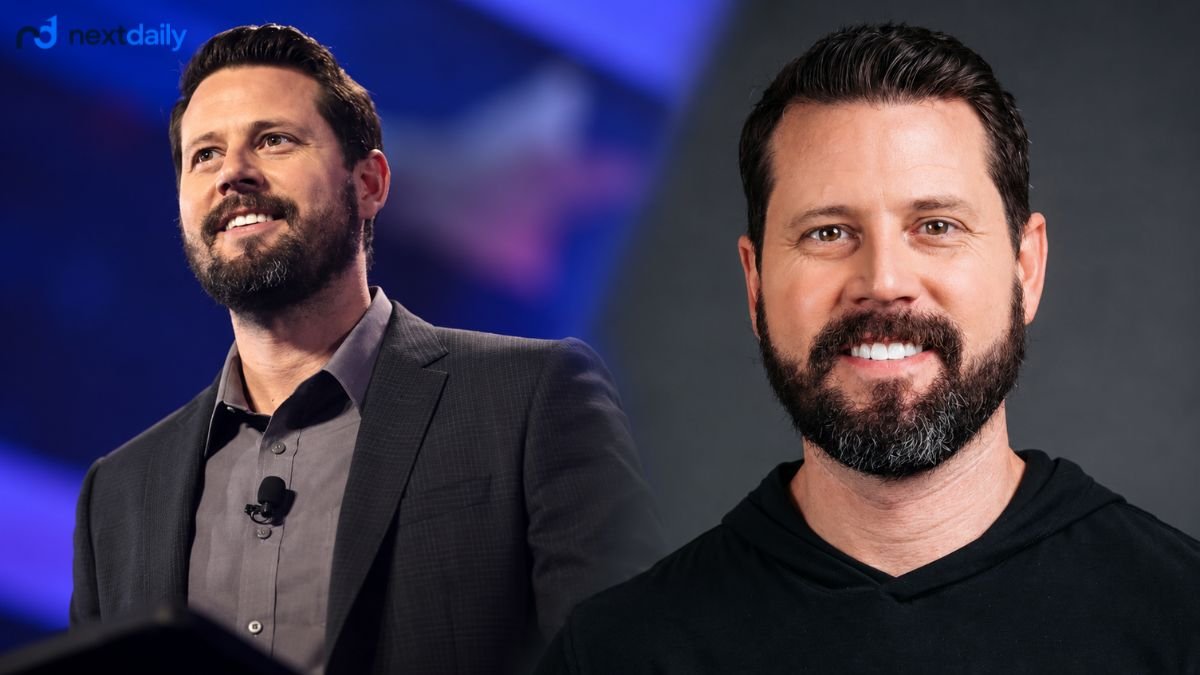
Seth Dillon is the CEO of The Babylon Bee, a US website that publishes satirical stories about religion, politics and everyday life. He took over the site in 2018, but he did not found it: cartoonist Adam Ford launched it in 2016. Dillon’s background in internet marketing, his leadership of the Bee and his public arguments about online speech have made him a prominent figure in conservative media.
Bio
| Detail | Verified information |
|---|---|
| Full name | Seth Dillon |
| Profession | Media executive and entrepreneur |
| Known for | CEO of The Babylon Bee |
| Founded The Babylon Bee? | No. Adam Ford founded it in 2016. |
| Joined the company | Acquired the site from Ford in 2018. |
| Earlier career | Internet marketing and business |
| Education | Says he graduated with a degree in business management; the university’s name is unclear in the available interview transcript. |
| Family | Has publicly said he has a wife and two sons. |
| Official X account | @sethdillon, listed on The Babylon Bee’s staff page. |
How Seth Dillon came to lead The Babylon Bee
Before joining the Bee, Dillon worked in internet marketing and ran his own business. In a conversation about his education and career, he said he had been homeschooled for part of his childhood and had graduated with a business management degree from a Christian university. He described discovering the Bee as a reader, then contacting Ford because he wanted to help it grow.
Ford had already established the site and its approach to satire. That distinction matters: Dillon’s role began with an existing publication, rather than an idea he created from scratch. According to reporting on the Bee’s ownership history, Ford sold the site to Dillon in April 2018, while initially keeping a smaller stake. Ford later sold his remaining interest in the Bee and the related site Not the Bee.
Dillon now leads a publication whose deliberately false headlines are written as jokes, often drawing on Christian culture and current affairs. His role as CEO is distinct from that of editor-in-chief Kyle Mann, who is identified separately on the Bee’s staff page. Understanding those roles helps explain why Dillon is frequently interviewed about the company’s direction and public disputes, even when the subject is a particular article or post.
His background and approach to satire
Dillon has connected the Bee’s church humour to his own upbringing. He has said his father was a pastor and that he grew up attending church. In the same interview, he described faith as a longstanding part of his life and recalled writing satirical emails about his university while he was a student.
His account of joining the Bee also shows why its publishing model interested him. Satirical headlines spread through social media, bringing readers to the website. Ford, Dillon said, had become concerned about how fact-checking and platform rules might affect that distribution. Dillon believed the site’s jokes could continue to reach an audience despite those pressures.
For readers unfamiliar with the format, a satirical news story imitates the style of reporting to make a joke or criticism; its invented events are not meant to be read as genuine news. Dillon has described the Bee as an entertainment site that also uses humour to challenge ideas. That is his stated view of its purpose, rather than a claim that every reader will interpret its jokes the same way.
The Bee’s Christian and conservative perspective is central to its identity. Its subjects extend beyond church life to politics and public debate, which helps explain why discussion of Dillon’s work often moves from comedy to questions about the limits of acceptable speech on large platforms.
Why the Twitter dispute drew attention
One of the most widely discussed episodes during Dillon’s tenure concerned the Bee’s Twitter account. In 2022, the account was locked over a post about Rachel Levine, a transgender US health official. Twitter considered the post a breach of its rules; Dillon publicly objected to the decision. After Elon Musk acquired Twitter, the Bee’s account was restored. TechCrunch’s coverage of the reinstatement places it among several decisions that prompted renewed debate about moderation and the treatment of transgender people on the platform.
The episode illustrates the disagreement surrounding the Bee’s work without settling it. Dillon has framed restrictions on its posts as a threat to satire and free expression. Critics of the post have focused on its treatment of a transgender person. Those positions are part of the public response to the publication, and neither should be mistaken for an undisputed description of the joke itself.
For Dillon, the dispute also made his role more visible outside the Bee’s regular audience. It brought questions about a media company’s reach, a platform’s rules and the effects of a satirical post into the same conversation. His public profile is therefore tied both to running the Bee and to defending its approach when its material is challenged.
What is known about his personal life?
Dillon has said publicly that he has a wife and two sons. He generally discusses his family in connection with his own background rather than as part of the Bee’s work. His career is the clearer focus of the public record: an entrepreneur with a marketing background who acquired an established satire site and became its chief executive.


One thought on “Seth Dillon: Who Is the CEO of The Babylon Bee?”